To achieve the best quality, outcomes and value for money in Medical Research Future Fund (MRFF) funded research, the Principles mention consumers should be involved:
Consumers interested in being involved in research, and researchers wanting to learn more about engaging consumers in their research, can also visit the RARE Portal for more information and links to resources. RVA also provides customised mentorship for RVA Partner organisations around participation in research: [email protected].
Background
This document outlines principles for consumer involvement in MRFF-funded research and practical guidance for researchers on their implementation. The Principles were developed with advice from the MRFF Consumer Reference Panel, a diverse group of socially, ethnically, culturally, linguistically and geographically diverse Australians, including people with lived experience as patients, service users and carers. The MRFF Consumer Reference Panel was established in 2022, ‘to provide advice to the Chief Executive Officer of the Health and Medical Research Office [the office responsible for implementation of the MRFF] on strategies for strengthening consumer involvement in the Medical Research Future Fund’s implementation’.
Why Is This Important?
Pillar 3 of the National Strategic Action Plan for Rare Diseases (the Action Plan) is Research and Data. For key decision-makers at all levels, greater knowledge of rare diseases can facilitate more responsive and appropriate services for people living with a rare disease and their families and carers. The Action Plan acknowledges that investment into all types of research related to rare disease is needed. There is an understanding in the Australian rare disease community that, while research may not lead to better outcomes for people currently living with a rare disease, participating in research may drive change for future generations.1
RVA’s Chief Executive Officer, Nicole Millis, mentioned the Strategy in her speech at RVA’s Rare Disease Day Parliamentary Event on 8 March 2023 and highlighted the importance of sustainable systems and workforce for rare disease more broadly.
Special thanks to the Project Steering Committee, RVA Partner organisation leaders and other experts in the specialist metabolic workforce for their guidance in co-developing the goals, recommendations and priority actions for the Strategy.
Why Is This Work Important?
Australia’s first nationally coordinated effort to address rare diseases—the National Strategic Action Plan for Rare Diseases (the Action Plan)3—called for the development of a national rare disease workforce strategy that responds to current and future demands, including the impact of genomics. ‘Sustainable systems and workforce’ is one of three foundation principles of the Action Plan.
The Strategy is an initial step to progress the development of a national rare disease workforce strategy. As the national peak body for Australians living with a rare disease, RVA is leading the collaborative implementation of the Action Plan.
About the Strategy
In 2022, RVA published the White Paper, 1 which together with sector consultation, informed development of the Strategy.2
A person-centred approach to implementing this Strategy is essential and is the responsibility of all stakeholders, including governments, hospital administrators, healthcare providers, specialist physician groups and policymakers across states and territories, and at a national level.
Next Steps
RVA will share the Strategy with all key stakeholders
RVA will seek meetings with Commonwealth, State and Territory Governments, Departments of Health and all specialist metabolic services across Australia to discuss timely implementation of the Strategy
As the national peak body for Australians living with a rare disease, Rare Voices Australia (RVA) is leading the collaborative development of the Rare Awareness Rare Education (RARE) Portal for rare diseases. The RARE Portal is one of the key deliverables of the Australian Government’s National Strategic Action Plan for Rare Diseases, the first nationally coordinated effort to address rare diseases in Australia.
The RARE Portal is a living website in ongoing development, with new information added regularly. Download the RARE Portal flyer. Feel free to distribute the flyer among your networks.
A look at the RARE Portal
The RARE Portal:
Is a digital library of verified rare disease information, services and resources
Is customised for the Australian context
Caters for all stakeholders in the rare disease sector and the general public, with dedicated pages for the rare disease community, healthcare professionals and researchers
Is a living website that is responsive to feedback and new knowledge
Highlights strengths and gaps across the rare disease sector, which can inform policy and service development
What’s on the RARE Portal
General information about rare diseases
Information for all stakeholders in the rare disease sector
Services and resources available nationally and in specific states and territories
Rare disease information customised for Aboriginal and Torres Strait Islander people, people from culturally and linguistically diverse backgrounds and people living in regional, remote and rural areas
Individual disease pages developed together with RVA Partner organisations (disease-specific groups)
A-Z Support Directory of rare disease groups
Opportunities for stakeholders to provide ongoing input via a Contribute page
RVA will circulate updates about the RARE Portal as it develops. Please fill out the form below if you’d like RVA to email you RARE Portal-related updates.
Rare Voices Australia (RVA) is looking to recruit a Communications and Engagement Officer. The suitable candidate will have a range of responsibilities, including supporting RVA’s Communications Manager and other staff across various communications and engagement tasks.
If you have proven experience in a similar role and are committed to improving the lives of Australians living with a rare disease, we’d love to hear from you. Applications close Monday 3 April 2023, 5.00pm AEST.
The Australian Government Department of Health and Aged Care has published the terms of reference (TOR) for the Health Technology Assessment (HTA) Policy and Methods Review (the HTA Review). Read the TOR.
Rare Voices Australia (RVA) was pleased to contribute to the TOR consultation as the national peak body for Australians living with a rare disease.
What is health technology assessment?
A Health Technology Assessment (HTA) involves a range of processes and mechanisms that use scientific evidence to assess the quality, safety, efficacy, effectiveness and cost effectiveness of health services. Learn more about HTA.
The terms of reference
The TOR better articulate how the HTA Review is positioned alongside other concurrent HTA reform processes undertaken, including the:
Refreshed National Medicines Policy
Standing Committee on Health, Aged Care and Sport inquiry into approval processes for new drugs and novel medical technologies in Australia
Co-design of an Enhanced Consumer Engagement Process (ECEP) to capture consumer voices regarding applications to list new medicines on the Pharmaceutical Benefits Scheme (PBS)
Rare Voices Australia’s reflections on the terms of reference
RVA is pleased that it is noted within the TOR that the ECEP will be informed by the existing Conversations for Change work led by the Department of Health and Aged Care, which involves RVA and rare disease organisation group leaders with an active interest in HTA.
The TOR read:
“The Enhanced Consumer Engagement Process is intended to facilitate the capture of informed consumer and patient perspectives earlier…”
RVA also welcomes the strong focus within the TOR on:
“identification of patient relevant outcomes”
“augmentation of… evidence with data designed to capture the value of health technologies from the perspective of patients and the community” (e.g. qualitative research, patient reported outcome measures (PROMs) etc.)
“increasing transparency”
“evaluations (including how the value of medicines is captured)”
How to participate in the Health Technology Assessment Review
The Department of Health and Aged Care advises there will be multiple opportunities for stakeholders to provide input throughout the HTA Review. You can subscribe to PBS News and Updates for more information about the HTA Review.
The first round of consultation focusing on the objectives in the TOR will open on 11 April 2023. A consultation plan outlining all opportunities for stakeholder involvement in the HTA Review will be available with the opening of the first round of consultations.
Why is health technology assessment important in rare disease?
As noted in the Australian Government’s National Strategic Action Plan for Rare Diseases (the Action Plan), many different types of health technology are used in rare diseases, and many more are emerging. Equitable access to health technologies is an important issue for the rare disease community and is highlighted in the Action Plan:
Priority 2.4: Enable all Australians to have equitable access to the best available health technology.
Limited data is inherent in rare diseases. This creates uncertainties that present specific challenges for HTA processes.
Preparing for stakeholder consultations
The following information may be of interest to organisations planning to participate in HTA Review stakeholder consultations.
RVA Education: Writing Effective Government Submissions – A Guide for Rare Disease Organisations (Available to RVA Partners)
Rare disease organisation leaders interested in lodging submissions to government inquiries and consultations
People living with a rare disease who are interested in lodging submissions and no formal support group exists
Note: if you are an RVA Partner, you will need to register on the site if you have not already done so.
RVA Partner organisations can also reach out to RVA for customised mentorship support: [email protected]
Health Technology Assessment international (HTAi) 2023 Annual Meeting
The Health Technology Assessment international (HTAi) 2023 Annual Meeting is taking place in Adelaide from 24 to 28 June 2023. The 2023 Annual Meeting theme is, The Road to Policy and Clinical Integration. HTAi is the global scientific and professional society for everyone who produces, uses, or encounters HTA to support optimal policy and decision making.
Thank you to everyone for your support of 2023 Rare Disease Day (28 February) and the estimated two million Australians living with a rare disease. Several Rare Disease Day themed events organised by our Rare Voices Australia (RVA) Partner organisations (rare disease groups) and other stakeholders took place to mark the day. It is wonderful to see Rare Disease Day continuing to gain momentum each year. Thank you to everyone for your invaluable contribution!
Watch the video for a snapshot of the events that took place globally.
As the national peak body for Australians living with a rare disease, RVA has put together a summary of highlights for 2023 Rare Disease Day in Australia.
Rare Voices Australia’s Rare Disease Day Parliamentary Event
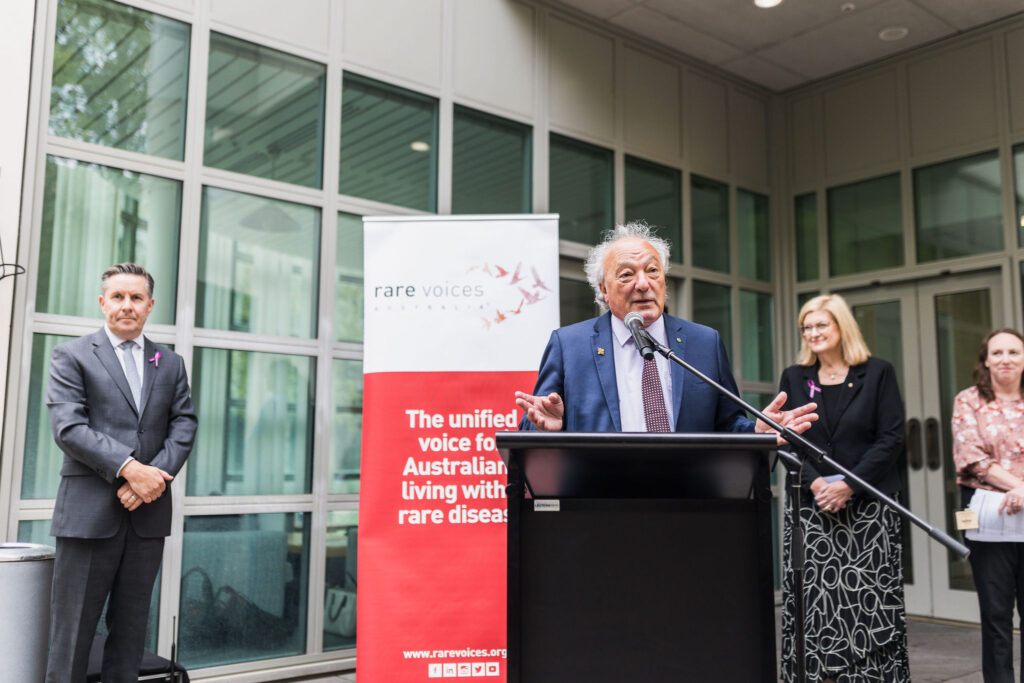
Dr Mike Freelander MP (Chair, Standing Committee on Health, Aged Care and Sport and Co-Chair, Parliamentary Friends of Rare Diseases) hosted RVA’s Rare Disease Day Parliamentary Event on 8 March. The event theme was, Ensuring Equity for Australians Living With a Rare Disease. Thanks to RVA Ambassador, Renae Wood, for sharing her personal story of living with epidermolysis bullosa and the difference equity can make for people living with a rare disease.
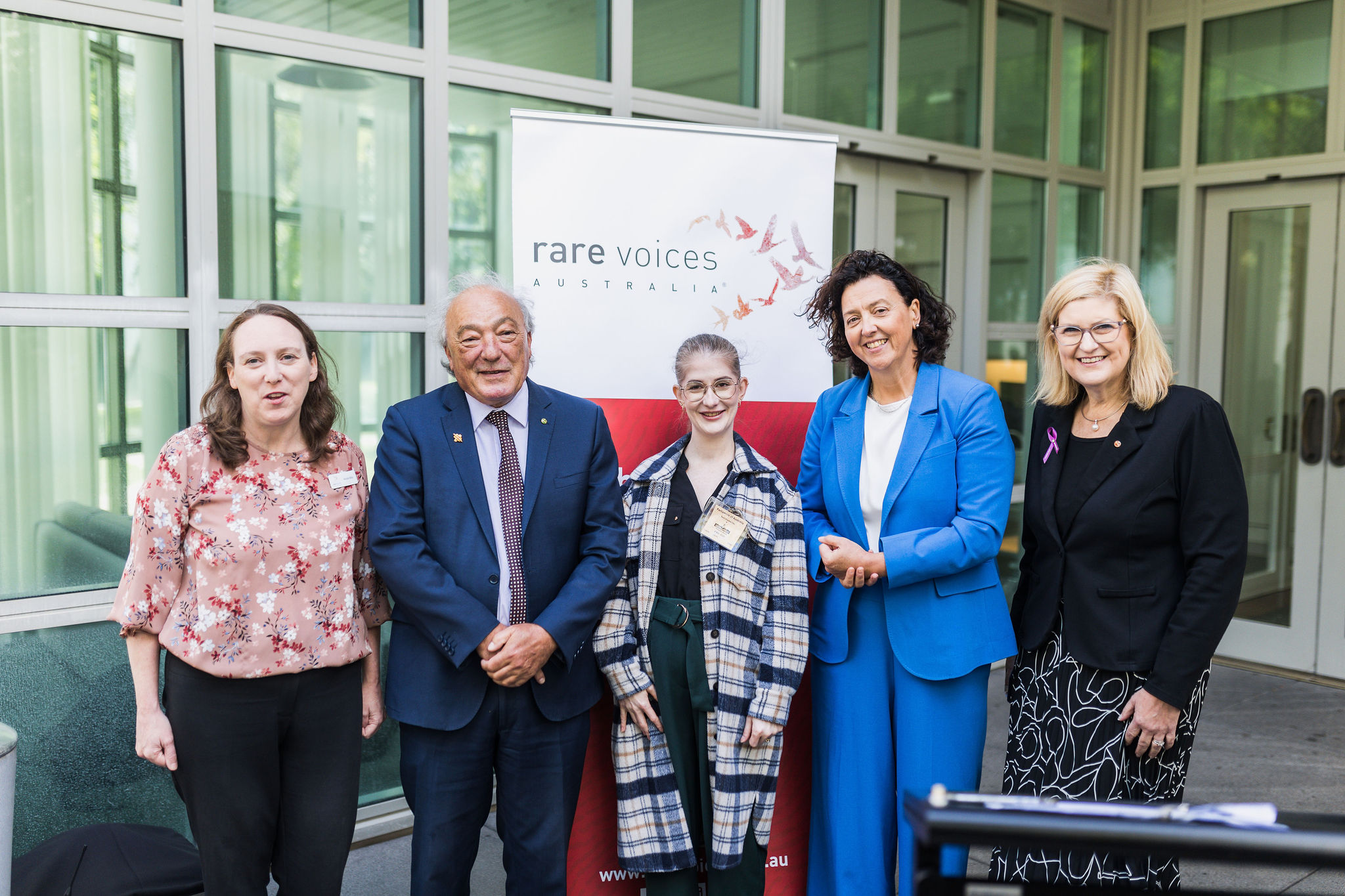
Thank you to our host Dr Freelander, Member for Macarthur, and the following Parliamentarians who spoke at the event:
Hon Mark Butler MP, Minister for Health and Aged Care
Senator the Hon Anne Ruston, Shadow Minister for Health and Aged Care
Senator Wendy Askew, Senator for Tasmania and Co-Chair, Parliamentary Friends of Rare Diseases
Dr Monique Ryan, Member for Kooyong and Co-Chair, Parliamentary Friends of Rare Diseases
RVA acknowledges the many political attendees, including over 20 Parliamentarians and Assistant Ministers (listed below), who attended for their support of Rare Disease Day.
Hon Ged Kearney MP, Assistant Minister for Health and Aged Care
Hon Dr Andrew Leigh MP, Assistant Minister for Competition, Charities and Treasury
Hon Emma McBride MP, Assistant Minister for Mental Health and Suicide Prevention; and Assistant Minister for Rural and Regional Health
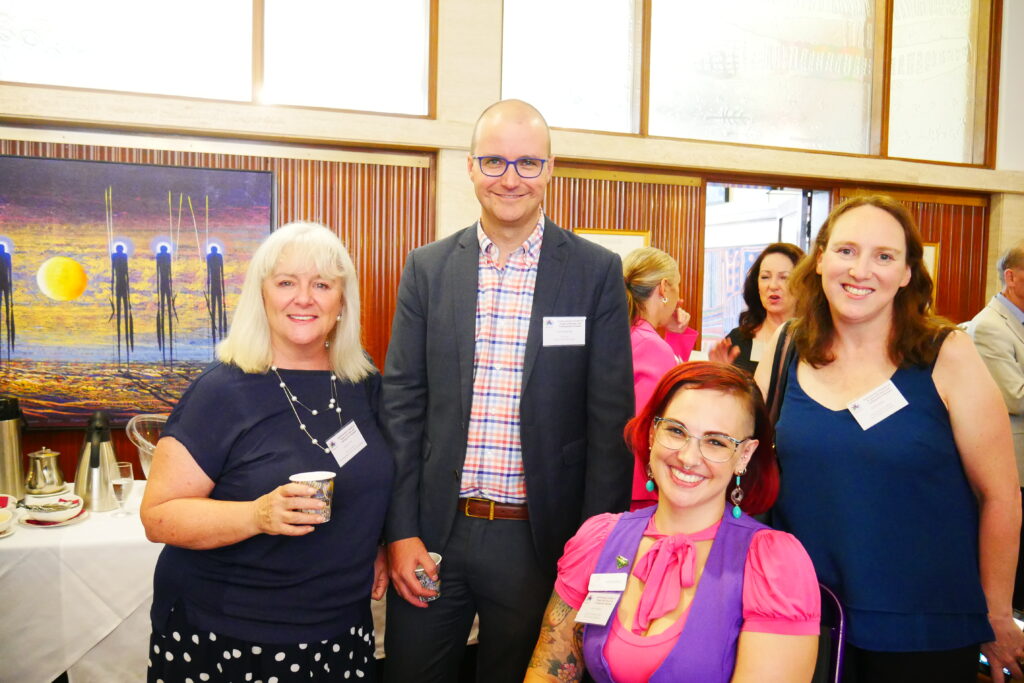
Special thanks to our RVA Ambassadors, RVA Partner organisation leaders and other stakeholders who also joined us. See more photos from the event.
Parliamentary Event Hosted by the Parliamentary Friends of People with Rare and Undiagnosed Diseases in Western Australia
RVA was pleased to attend a Rare Disease Day Parliamentary Event on 21 February hosted by the Parliamentary Friends of People with Rare and Undiagnosed Diseases in Western Australia. RVA’s Chief Executive Officer, Nicole Millis; Director, Kane Blackman; Scientific and Medical Advisory Committee member, Clin/Prof Gareth Baynam; Education Project Officer, Jess Brooklyn; and RVA Ambassador, Andrew Bannister were pleased to attend. The event focused on the experiences of people living with a rare disease. Click here to read more.
Global Chain of Lights and Landmark Illuminations in Australia
The Global Chain of Lights is a key Rare Disease Day initiative, with the global community coming together to illuminate landmarks in support of people living with a rare disease. Over 60 landmarks (that RVA is aware of) were illuminated. A big thank you to our small group of volunteers who secured landmark illuminations for 2023 with assistance from RVA as needed and whose efforts are always very much appreciated.
Social Media
Several politicians and the Australian Government Department of Health and Aged Care posted about Rare Disease Day and RVA’s Parliamentary Event across social media.
RVA was excited to take over the official Rare Disease Day social media accounts on 16 February. Thank you to our RVA Ambassadors who filmed short videos for Instagram and TikTok. The Instagram Reel filmed by RVA Ambassador Renae Wood generated over 27,500 views on Instagram and Facebook. Amazing!
Media
Several RVA Partner organisations secured media coverage on Rare Disease Day. Congratulations to everyone who helped to spread the word about the day and rare diseases generally!
What is Rare Disease Day?
Rare Disease Day is the globally coordinated movement for rare diseases, working towards equity in social opportunity, healthcare, and access to diagnosis and therapies for people living with a rare disease. The campaign is organised globally by EURORDIS – Rare Diseases Europe, Rare Diseases International and 68 national alliances. RVA is:
The national alliance that represents Australia for Rare Disease Day annually
A member of the Rare Disease Day Steering Committee that oversees the campaign in the longer-term
The Importance of Rare Disease Day Locally
Locally, Rare Disease Day is an opportunity to raise awareness and inform policymakers on the issues faced by the Australian rare disease community, in an effort to achieve meaningful change. Pillar 1 of the National Strategic Action Plan for Rare Diseases is Awareness and Education, while ‘State, national and international partnerships’ is a critical enabler.
Each year, Rare Disease Day continues to build momentum and planning is already underway for next year, which is a leap year. This means Rare Disease Day will take place on the rarest day of the year (29 February).
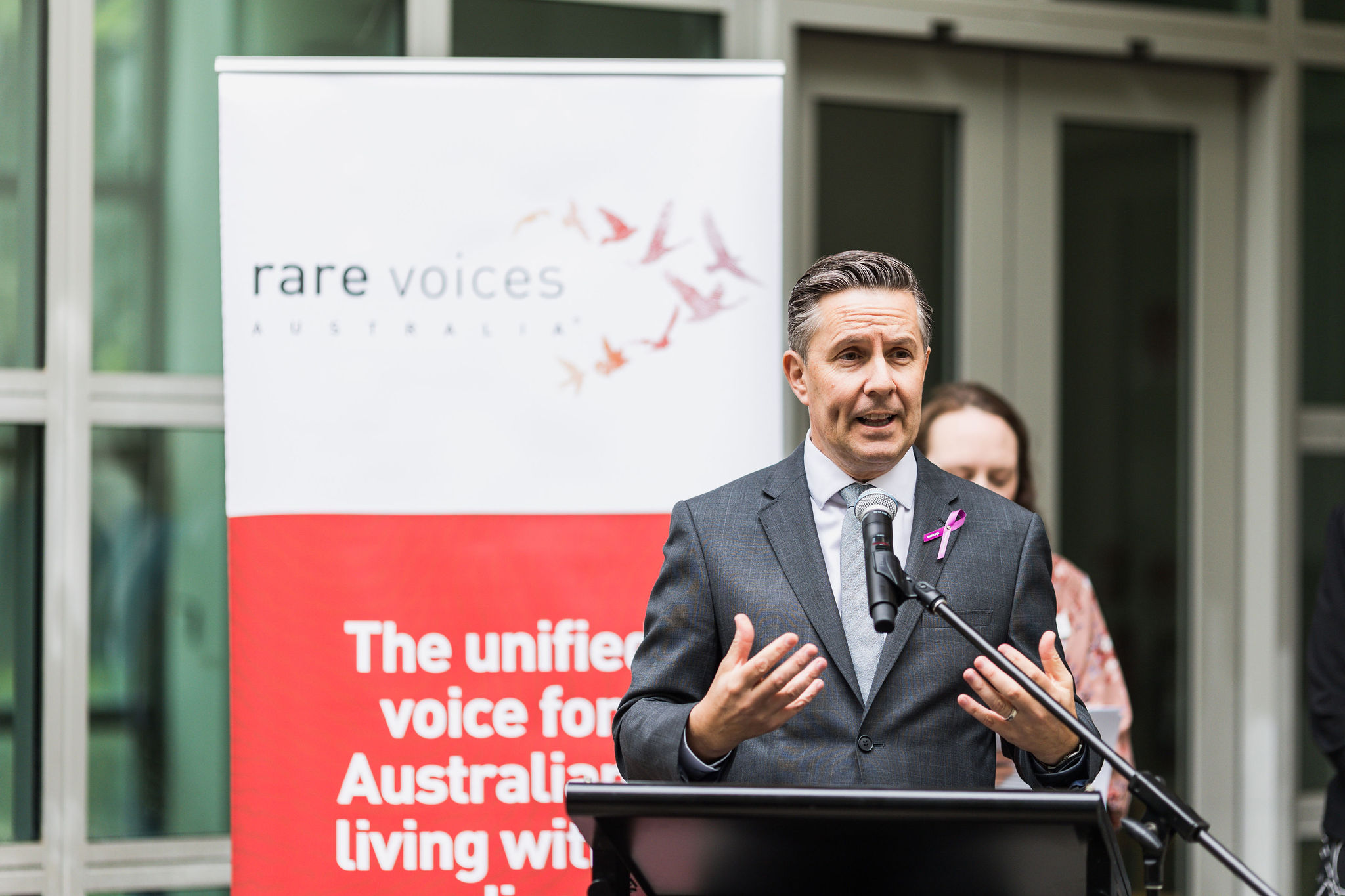
Rare Voices Australia (RVA) thanks everyone who attended our Rare Disease Day Parliamentary Event in Canberra on 8 March 2023 hosted by Dr Mike Freelander MP (Chair, Standing Committee on Health, Aged Care and Sport and Co-Chair, Parliamentary Friends of Rare Diseases). The event theme was, Ensuring Equity for Australians Living With a Rare Disease. Thanks to RVA Ambassador, Renae Wood, for sharing her personal story of living with epidermolysis bullosa and the difference equity can make for people living with a rare disease.
As the national peak body for Australians living with a rare disease, RVA was pleased to provide a progress update on implementation of the National Strategic Action Plan for Rare Diseases, which requires ongoing multi-partisan collaboration and support.
Thank you to our host Dr Freelander, Member for Macarthur, and the following Parliamentarians who spoke at the event:
Hon Mark Butler MP, Minister for Health and Aged Care
Senator the Hon Anne Ruston, Shadow Minister for Health and Aged Care
Senator Wendy Askew, Senator for Tasmania and Co-Chair, Parliamentary Friends of Rare Diseases
Dr Monique Ryan, Member for Kooyong and Co-Chair, Parliamentary Friends of Rare Diseases
RVA acknowledges the many Parliamentarians who attended for their support of Rare Disease Day and the estimated two million Australians living with a rare disease.
Special thanks to our RVA Ambassadors and RVA Partner organisation leaders who also joined us. Locally, Rare Disease Day is an opportunity to raise awareness and inform policymakers on the issues faced by the Australian rare disease community, in an effort to achieve meaningful change.
Rare disease appropriate National Disability Insurance Scheme (NDIS) supports and planning are an ongoing focus of Rare Voices Australia’s (RVA) advocacy. RVA has been working alongside several RVA Partner organisations (rare disease groups) that have experience and expertise with the NDIS to address systemic issues and gaps for people living with a rare disease who are also NDIS applicants or participants.
Consultations with the National Disability Insurance Agency
In 2021 and 2022, representatives from rare disease groups, including RVA Partners Angelman Syndrome Association Australia; Batten Disease Support and Research Association Australia; Fragile X Association Australia; Huntington’s NSW ACT; Mito Foundation; Muscular Dystrophy Queensland; and SCN2A Australia met with representatives of the National Disability Insurance Agency (NDIA) alongside RVA. The purpose of these consultations was to highlight how the complex, changing and multi-faceted needs of people living with a rare disease could be better addressed.
In 2019, RVA collaborated with the rare disease sector on the paper, Disability & Rare Disease: Towards Person Centred Care for Australians with Rare Diseases. This paper collated evidence about the unmet needs of Australians living with a rare disease that cause disability. The paper also informed recommendations related to rare disease, disability and the NDIS in the Australian Government’s National Strategic Action Plan for Rare Diseases (the Action Plan). The Action Plan is the first nationally coordinated effort to address rare disease in Australia.
RVA has since engaged in multiple discussions at various levels within the NDIA. In 2022, the NDIA recognised the value of this ongoing conversation and identified RVA as a key peak body stakeholder.
Why is this important?
This has enabled discussions about policy and the systemic changes required for the NDIS to better respond to the needs of people living with a rare disease.
Four immediate key priorities:
In the first meeting for 2023, the NDIA, group of representatives and RVA agreed to progress:
Ensuring decisions about rare disease applicants and candidates are informed by appropriate rare disease expertise. This expertise would cater for the nuances and unique challenges rare diseases present to those engaging with the NDIS. RVA has been invited to propose a model that will facilitate ongoing access to this expertise.
Education for agency staff around the unique needs of applicants and participants living with a rare disease. This is designed to support responses and language that are sensitive to individuals and families diagnosed with a progressive, life-limiting, episodic and undiagnosed/rare disease where future needs are uncertain. RVA will be seeking input from our RVA Partner organisations regarding this.
A discussion on ways to navigate the complex interactions between the health, education, social support, employment and disability systems. The aim is to ensure that gaps and fragmentation are addressed to better meet the needs of people living with a rare disease that cause disability.
Ways to improve data collection regarding acceptance and participation of people living with a rare disease in the NDIS. Data collection of this nature will increase the visibility of participants in the NDIS living with a rare disease; provide evidence around the current experience of NDIS participants who have a rare disease; assist in identifying best practice; and recognise and address systemic gaps.
Acknowledgements
RVA would like to thank and acknowledge our RVA Partner organisations that have collaborated with us to progress these important issues. This work is yet another demonstration of the resourcefulness and effectiveness of rare disease advocates in our community.
Next steps
While RVA is aware that there are other important issues to address regarding the NDIS and people living with a rare disease, the four areas highlighted above have been prioritised as they are the foundation for other necessary improvements. RVA will continue to update stakeholders as these discussions progress and will reach out to RVA Partner organisations shortly to seek their input as needed.
Rare Voices Australia (RVA) was pleased to attend a Rare Disease Day Parliamentary Event on 21 February hosted by the Parliamentary Friends of People with Rare and Undiagnosed Diseases (Parliamentary Friends Group) in Western Australia. RVA’s Chief Executive Officer, Nicole Millis; Director, Kane Blackman; Scientific and Medical Advisory Committee member, Clin/Prof Gareth Baynam; Education Project Officer, Jess Brooklyn; and RVA Ambassador, Andrew Bannister were pleased to attend.
The event focused on the experiences of people living with a rare disease. Karen Tighe shared her experience of living with encephalitis, while Monique Garcia spoke about being the mother and carer of a child living with a rare disease.
RVA thanks Co-Convenors of the Parliamentary Friends Group, the Hon Matthew Swinbourn MLC, the Hon Donna Faragher MLC and the Hon Stephen Pratt MLC, for their ongoing support of the rare disease community. We also thank the Parliamentarians who attended for their support of Rare Disease Day and the estimated two million Australians living with a rare disease.
Why are Parliamentary Events important?
Parliamentary Events provide stakeholders, including people living with a rare disease, with the opportunity to meet and speak with politicians to further highlight rare diseases. Locally, Rare Disease Day is an opportunity to raise awareness and inform policymakers on the issues faced by the Australian rare disease community, in an effort to achieve meaningful change. Pillar 1 of the National Strategic Action Plan for Rare Diseases is Awareness and Education, while ‘State, national and international partnerships’ is a critical enabler.
Rare Disease Day occurs on the last day of February annually. In 2023, Rare Disease Day will be marked on Tuesday 28 February. Rare Voices Australia (RVA) will be organising our annual Rare Disease Day Parliamentary Event on Wednesday, 8 March 2023. This event is invite-only to maintain stakeholder balance.
Rare Disease Day is the globally coordinated movement for rare diseases, working towards equity in social opportunity, healthcare, and access to diagnosis and therapies for people living with a rare disease. The campaign is organised globally by EURORDIS – Rare Diseases Europe, Rare Diseases International and 68 national alliances. RVA is the national alliance that represents Australia for Rare Disease Day annually.
2023 Rare Disease Day
The call to action for 2023 is, Share Your Colours. The campaign hashtags are: #RareDiseaseDay #LightUpForRare #ShareYourColours
The Importance of Rare Disease Day Locally
Locally, Rare Disease Day is an opportunity to raise awareness and inform policymakers on the issues faced by the Australian rare disease community, in an effort to achieve meaningful change. Pillar 1 of the National Strategic Action Plan for Rare Diseases is Awareness and Education, while ‘State, national and international partnerships’ is a critical enabler.
Global Chain of Lights and Landmark Illuminations in Australia
The Global Chain of Lights is a key Rare Disease Day initiative, with the global community coming together to illuminate landmarks in support of people living with a rare disease. You can see which landmarks are illuminating for Rare Disease Day in Australia via this document*. Thank you to the small group of volunteers who have secured landmark illuminations for 2023 with assistance from RVA as needed.
*Note: landmark illuminations are subject to change and RVA will continue updating the document as needed.
If you take pictures of the illuminations or other Rare Disease Day activities and would like to share them, please email: [email protected]
Alternatively, you can tag RVA on social media.
Media Pack
RVA has put together a Media Pack for media activity you or your organisation would like to engage in. We encourage you to customise the media release template as needed.