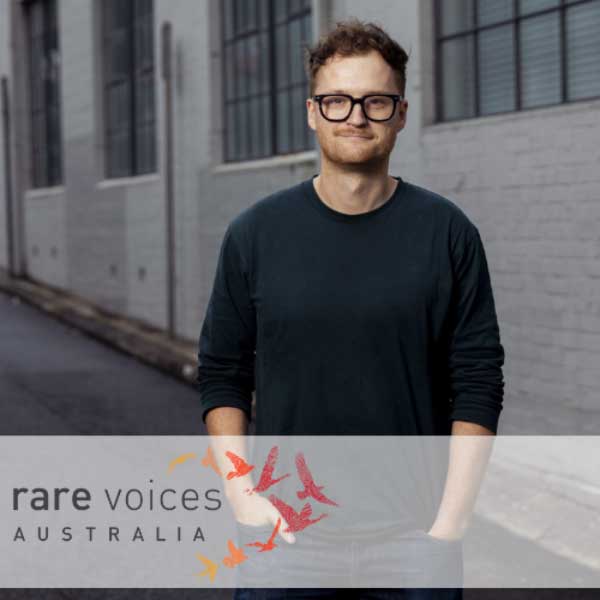
I’m Archie, and I usually start my story the same way: My medical history is long and complicated, so I’ll try my best to be as brief as possible.
I was born in 1987. When I was three years old, I was hospitalised for the first time with low blood platelets and was diagnosed with idiopathic thrombocytopenic purpura (ITP). After two hospital admissions, my platelets recovered and my health throughout childhood was fairly uneventful, although I had low platelets and often bruised quite dramatically.
In my early 20s, my health started to unravel. In 2011, while living in London, blood test results showed I had low immunoglobulins. The doctor suggested I may have the primary immune disorder, common variable immunodeficiency (CVID).
I returned to Australia, and in 2013, was diagnosed with non-Hodgkin lymphoma and underwent chemotherapy. The chemotherapy was a success. However, during my treatment, I was formally diagnosed with CVID. Although I had beaten cancer, continuing to live with a faltering immune system, along with ITP and CVID, left me feeling this wasn’t going to be the end of my story.
Throughout the following years, I was hospitalised several times, including for a life-threatening bout of pneumonia.
In 2017, my health seemed relatively stable and my partner, Keya, and I moved to Vancouver in Canada. We enjoyed celebrating my five years of remission following my lymphoma.
Unfortunately, in 2019, my health took another turn and this time, my bowel was the issue.
After dragging my very unwell self to a hospital in Vancouver, I was diagnosed with ulcerative colitis (UC). UC causes inflammation in the bowel and bleeding.
The UC diagnosis was based on the severity of the inflammation. I was told my colon was going to have to be removed and that I would need an ileostomy bag for life. After about 20 days and having lost 17kg, I was given the ultimatum that if we didn’t see an improvement, I would have to have surgery. Being stubborn and refusing to have my colon removed, I was given an option B, which was to try a drug. However, given my cancer history and being immunocompromised, this was not the advice I was given as it could have resulted in a cancer relapse.
I chose option B.
After three days, in my last blood test results, we saw enough of a drop in my inflammation to know the drug was working and by day 27, I was discharged with my colon intact.
While in hospital, amid the whirlwind of doctors, an immunologist asked me, “You are doing well collecting auto immune diseases. Have you ever had genetic testing before?”
So, after leaving hospital with my badly scarred colon, I chased up immunology to have genetic testing.
While waiting for my genetic testing results, I was readmitted to hospital for low platelets as the doctors were worried the cancer had relapsed. Given I chose option B, this was likely and felt pretty heavy. Thankfully, it wasn’t the case, and I was discharged.
The night before my next appointment with immunology, I received my genetic testing results by email, which showed a positive result for the pathogen WAS – Wiskott-Aldrich syndrome. WAS is a rare (1:100’000 to 1:1’000’000) X-linked immunodeficiency.
While Googling WAS that night, I had many lightbulb moments: Everything made sense. My low platelets, being sick all the time, cancer, UC, even my childhood eczema!
While WAS is a severe genetic disorder, a positive aspect is that it is potentially curable with a stem cell transplant. Its severity is calculated by several factors but given I’d already had cancer, I was considered in the most severe group.
From that moment, under the care of my immunology team in Vancouver, we started working towards having a stem cell transplant. During donor testing, my brother and sister were found to be matches. However, about four months after being diagnosed with WAS, the world was hit with the COVID-19 pandemic.
If being diagnosed with a severe genetic disorder that required a stem cell transplant during a global pandemic while living abroad wasn’t complicated enough, three weeks into the COVID-19 lockdowns, Keya learned she was pregnant.
To say we were overwhelmed would be fair, however, the support we received from the medical community was something very special. About four weeks after COVID-19 began, we had a Zoom call Brady Bunch style with doctors in Boston who were experts in WAS.
The significance that a group of immunologists were taking the time to speak to us just a month into the COVID-19 pandemic was something I’ll never forget. After that appointment, we went away with a plan and some confidence at a very uncertain point of our lives that we now had a path. The plan was to return to Australia, have our son, and then when he was around six months old, I would undertake the stem cell transplant.
In July 2020, on planes carrying 30 people, we returned to Australia. In November 2020, we welcomed our son Barry and in May 2021, I undertook the stem cell transplant in Sydney.
By every metric, the stem cell transplant was a success. My chimerism level is at 99%, meaning my blood is almost entirely my brother’s DNA. As a result, not only is my WAS in remission, but my UC is as well, and I am approaching my stem cell transplant remission in May 2026.
And, as if life hadn’t surprised us enough, despite another two rounds of chemotherapy and 18 months after my stem cell transplant, Keya fell pregnant again. In June 2023, we welcomed our daughter, Indahli.
This is usually where I finish my story because it’s a nice place to finish. I’ve been supported by so many doctors, hospitals, friends, family, and my partner, Keya. I feel I can never fully repay everyone.
Having experienced such a life-changing and successful outcome, I hope to continue advocating for greater awareness and resources for rare diseases and for greater access to genetic testing.
I’ve been told I’m quite resilient, and people have said some lovely things about how I’ve remained positive, but it’s been a long story.
But it’s a story with a good ending.