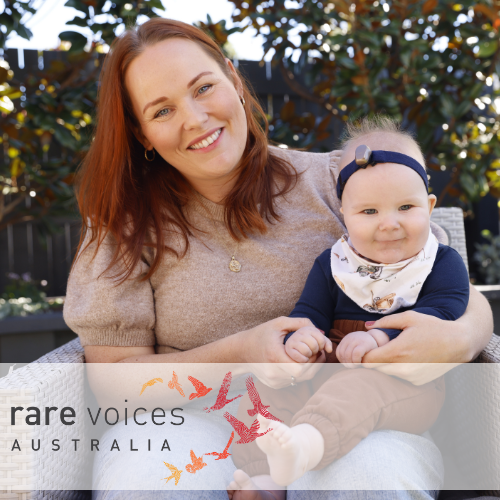
When our son Liam was born in October 2025, we knew almost immediately that his start to life was going to look a little different. He was born with microtia and conductive hearing loss on his right side. By seven weeks old, he was wearing a bone-conduction hearing aid. At that point, we thought hearing loss might be the only special part of Liam’s story. We had no idea how much our lives were about to change.
When Liam was just a few months old, he became critically unwell and was diagnosed with severe dilated cardiomyopathy. Our world became hospital rooms, medications, scans and conversations no parent ever expects to have.
Genetic testing eventually gave us an answer: Alström syndrome. We had never heard those words before. Alström syndrome is an ultra-rare genetic condition that can affect many different systems of the body. Suddenly, we weren’t just dealing with Liam’s heart and hearing. We were being introduced to an uncertain future involving his vision and potentially many other aspects of his health.
There is a particular kind of grief that comes with being told what might happen to your child, including the possibility that you may live longer than them. You look at this beautiful little baby, smiling and cuddling you, while trying to absorb information about a future you desperately wish you could protect him from. So, we started searching for answers.
We found other Alström families, researchers, clinicians and the wider rare disease community. The fear didn’t disappear, but we stopped feeling quite so alone. We also found the Deafblind community. That connection has been unexpectedly powerful for me. I have spent much of my career working in the arts, particularly creating and producing experiences for communities, including children and families.
Before Liam, I thought I understood accessibility and inclusion. Becoming his mum has made me realise how much more there is to learn. It has also made me incredibly excited about what is possible.
If Liam experiences art differently, I don’t want that to mean he experiences less of it. I want him to feel it, touch it, hear it, move through it and find his own way into the joy and wonder that art can create. And I want that for other children too.
I’ve begun exploring how my own arts practice might create inclusive sensory experiences with and for children who experience the world differently. So much of Liam’s diagnosis was about being told what he might lose or what might become harder. Finding these communities helped me ask a different question: What can we make possible?
That question also sits at the heart of Rare Voices Australia Partner, Alström Syndrome Australia, which we established so that Australian families have somewhere to find each other and can be better connected to the clinicians, researchers and international community working towards a better future.
Liam is so much more than Alström syndrome. He is social, cheeky and determined. He loves music, cuddles, our dogs and being in the middle of a conversation. He adores his big sister Delilah and completely lights up around her. At the moment, he’d much rather be standing up and involved in everything than sitting quietly on the sidelines. That is the Liam we see every day. Not a diagnosis. Our little boy.
One of the biggest things I have learned is that joy can exist alongside grief and fear. You don’t have to choose one or the other. I can be frightened about Liam’s future and fiercely hopeful for it at the same time. We don’t know what medicine and research will offer Liam in five, 10 or 20 years. But hope isn’t only about waiting for a treatment. It’s supporting the science that might change his future while making his life as rich, joyful and full as possible today. It’s making sure children like Liam have every opportunity for art, music, play, friendship and belonging.
Visit this webpage to learn more about Alström Syndrome Australia’s official launch event on Tuesday, 10 November 2026 at 5:30pm at Brisbane Powerhouse. The event is complimentary. Anyone interested in rare disease, research, accessibility and/or Alström Syndrome Australia’s work is welcome to attend.