New Findings from the EURORDIS Rare Barometer Survey: Mental Health Impacts of Rare Disease
EURORDIS has released the findings from its Rare Barometer survey on the mental health impacts of living with a rare disease.
The findings highlight the severe and widespread unmet need for psychological support for people living with a rare disease and reinforce the need for mental health to be recognised as a core component of rare disease care.
In Australia, this need was identified in the Australian Government’s National Strategic Action Plan for Rare Diseases. Additionally, psychosocial and mental health impacts and supports, are one of Australia’s Top 10 Rare Disease Research Priorities.
Rare Barometer Australian Findings
As the national peak body for Australians living with a rare disease, Rare Voices Australia (RVA) is pleased to share the Australian findings from this survey.
The findings are based on the experiences of 125 Australian participants living with a rare disease and their families in 2025. We thank EURORDIS for sharing the Australian data and factsheet.
The factsheet compares the experiences of Australians living with a rare disease with those of the general Australian population. It also highlights the urgent need to improve mental health and psychosocial support.
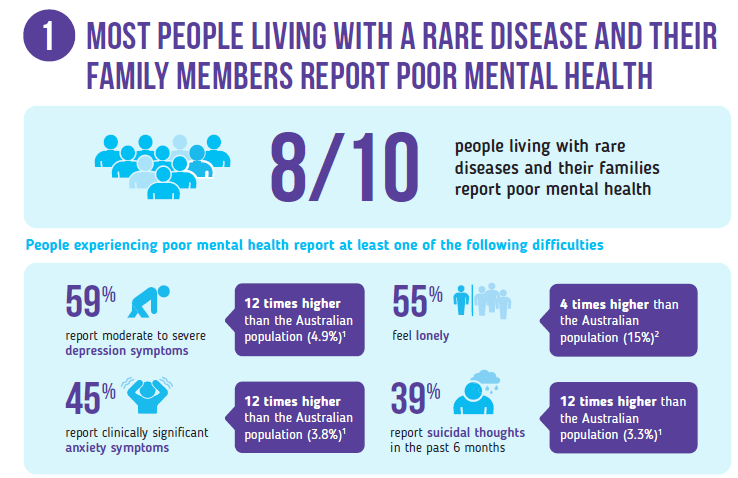
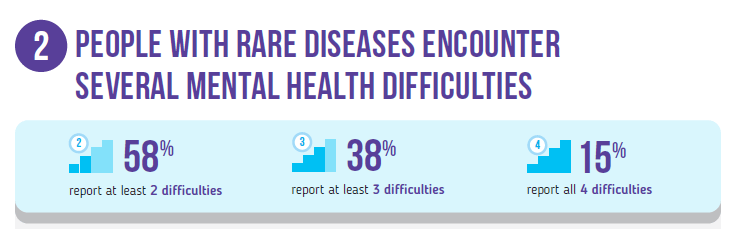
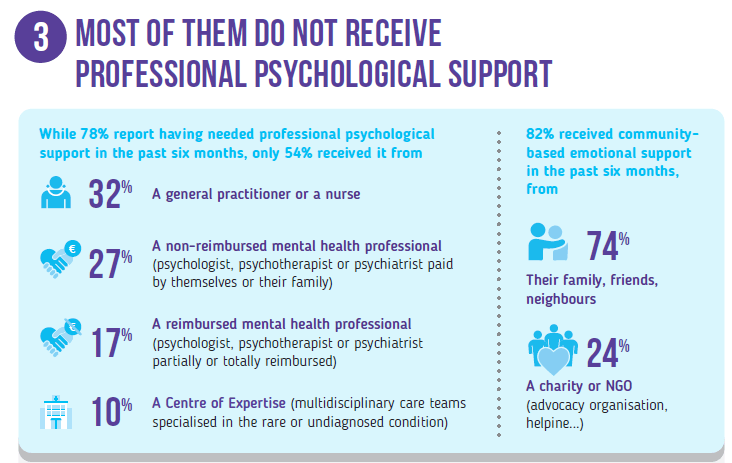
These screenshots are taken from the Australian factsheet. Download the PDF.
You can also download the European factsheet to compare the data.
If you or someone else is in immediate danger, call an ambulance on 000. Medicare Mental Health also lists several 24/7 crisis support services.
Improving Mental Health Outcomes for Australians Living with a Rare Disease
RVA encourages all rare disease stakeholders, including policymakers, to use the Rare Barometer findings to advocate for improved mental health and psychosocial support for Australians living with a rare disease. This requires not only better access to tailored mental health services but also access to systems that reduce the burden of finding, coordinating and managing care, including access to nationally coordinated networked Rare Disease Centres of Expertise.